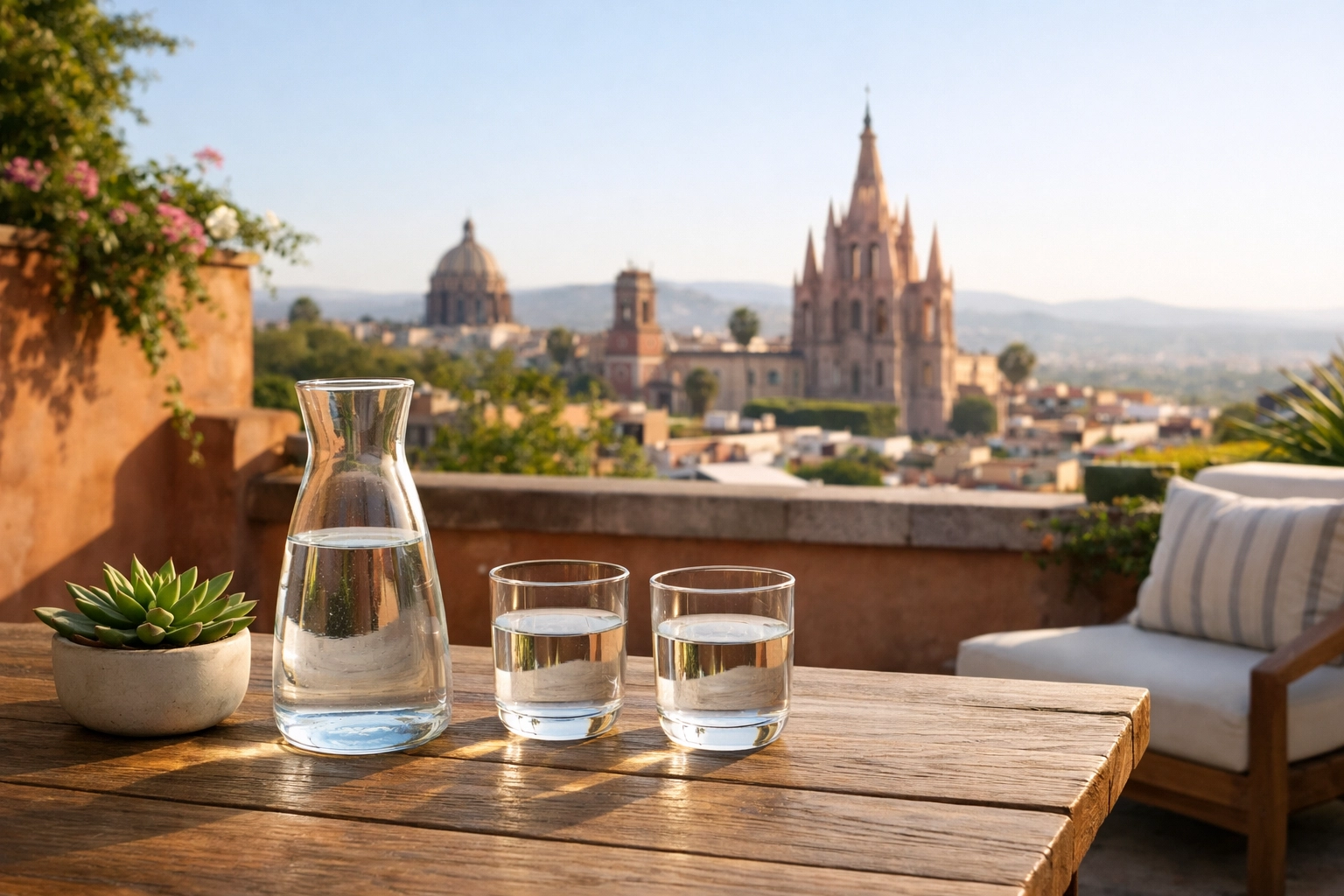

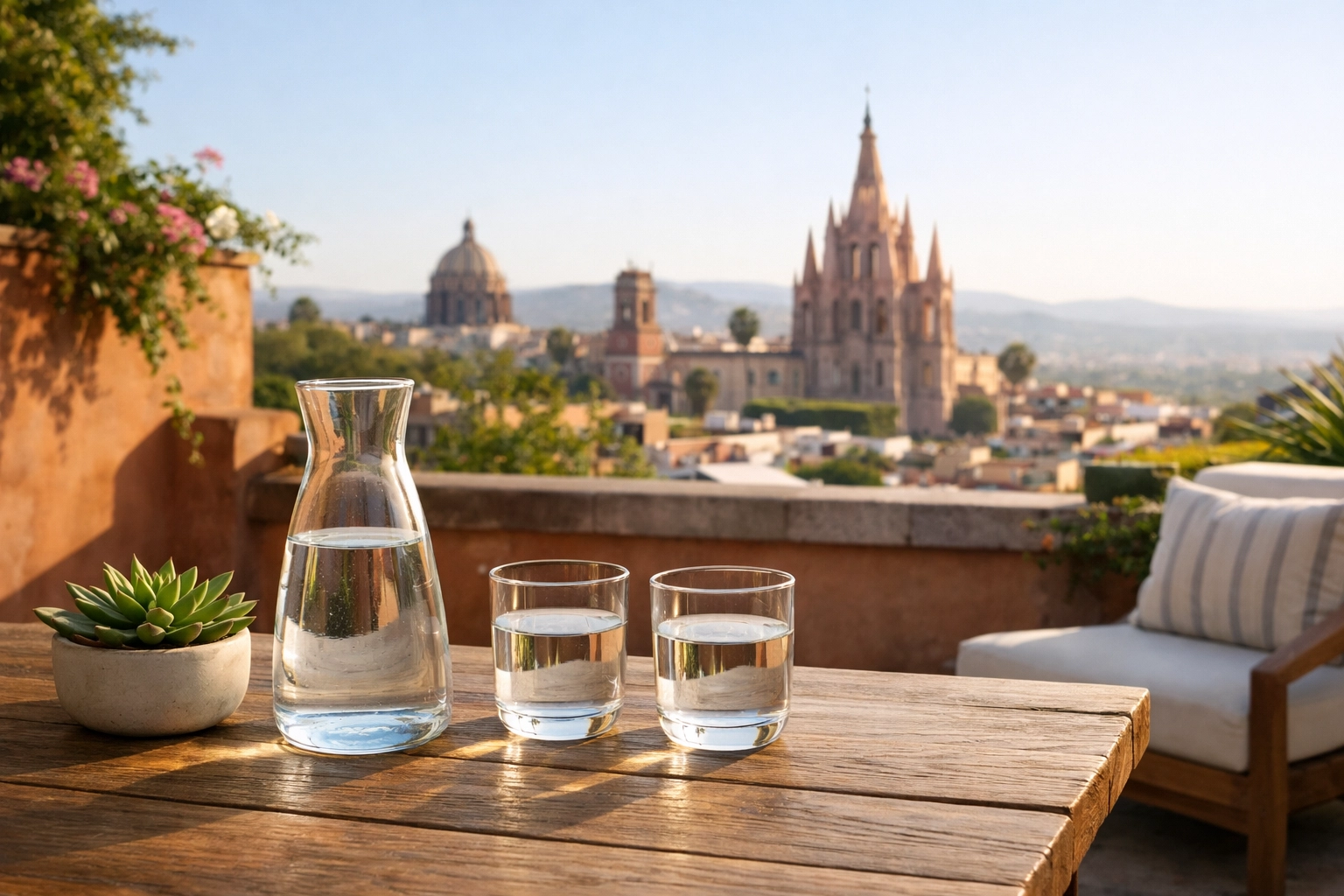
There is a specific kind of magic that happens when you walk through the cobblestone streets of San Miguel de Allende. The sun hits the ochre and terracotta walls just right, the smell of fresh churros wafts through the Jardín, and for a moment, everything feels perfect. But then you go home, turn on the tap to wash some vegetables or hop in the shower, and reality sets in.
Maybe it’s the white, crusty scale building up on your beautiful tile work, or that nagging feeling in the back of your mind about what’s actually in the water. If you’ve lived here long enough, you know that finding the right water filtration in San Miguel de Allende isn’t just a luxury, it’s a necessity for your health and your home.
At Acuario, we’ve spent a lot of time talking to SMA homeowners who are tired of the “status quo” of water filtration. They’re tired of the waste, the low pressure, and the constant maintenance. That’s why we’ve brought a different kind of technology to the table, one that actually respects the unique environment of the high desert.
The San Miguel Water Challenge: It’s More Than Just “Hard”
If you’ve noticed your skin feeling dry or your coffee tasting a bit… off, you’re experiencing the high mineral content of the Independence Aquifer. But the “hardness” is really just the tip of the iceberg.
San Miguel de Allende faces specific geological challenges. Because our water comes from deep underground, it often carries a high concentration of heavy metals and minerals that shouldn’t be there. We’re talking about things like arsenic and fluoride.
Arsenic water purification is a hot topic in the Bajío region for a reason. Studies suggest that long-term exposure to even low levels of arsenic in drinking water can lead to serious health issues. Similarly, while fluoride is often touted for dental health, the levels found in our local wells can be significantly higher than what is considered safe for daily consumption.

A Shrinking Aquifer and Rising Contaminants
San Miguel relies heavily on the Upper Río Laja aquifer. But over-pumping has dropped water tables by 2 to 3 meters annually, creating a dangerous side effect: deeper wells are now drawing up water laced with arsenic and fluoride. These contaminants are tasteless and invisible, making them hard to detect but devastating over time — linked to diseases like skeletal fluorosis, kidney damage, and certain cancers.
In communities like Santa Cecilia and Insurgentes, testing reveals contaminant levels well above safe limits. Conventional filtration systems, such as municipal treatment plants or household filters, are not equipped to remove these toxins effectively.
Why Is This Happening?
San Miguel de Allende sits above the Upper Río Laja aquifer, which serves as the primary water source for more than 680,000 people across northern Guanajuato. This shared resource has been severely overexploited—primarily by large-scale agricultural operations, which consume up to 85% of the region’s total water supply.
As demand has increased and rainfall patterns have become more erratic, the water table has been dropping at an alarming rate of 2-3 meters (approximately 7-10 feet) per year. This is among the most rapidly depleted groundwater sources on the planet.
As wells are drilled deeper to reach the receding water table, they tap into geological layers where arsenic and fluoride occur naturally at higher concentrations. What was once relatively clean water is now increasingly contaminated—not from industrial pollution, but from the very minerals in the earth.
The Health Risks
The dangers of long-term exposure to arsenic and fluoride are well-documented and severe. These aren’t minor inconveniences—they’re serious health threats, particularly for children.
Fluoride contamination leads to dental fluorosis (irreversible brown staining and pitting of teeth) and, in extreme cases, crippling skeletal fluorosis, which causes permanent bone deformities. High fluoride exposure has also been linked to cognitive impairments in children and kidney disease.
Arsenic exposure carries even graver risks. There is no safe level of arsenic consumption. Even small amounts accumulate in the body over time, leading to skin lesions, cardiovascular disease, diabetes, and multiple forms of cancer. Children are especially vulnerable, as their bodies absorb contaminants more quickly.
Dylan Terrell, Executive Director of Caminos de Agua, emphasized the scope of the problem: “This isn’t just about water. It’s about systemic health deterioration—kidney failure, dental and crippling skeletal fluorosis, cognitive issues in children. And it’s all invisible until it’s too late.”
Guanajuato ranks fifth highest in Mexico for kidney disease—a statistic that researchers believe is directly connected to fluoride contamination in drinking water.
It’s Safe for Some Uses, Dangerous for Others
Here’s an important distinction: arsenic and fluoride are only dangerous when consumed—meaning drinking or cooking. The health risks associated with bathing, showering, washing dishes, or doing laundry with contaminated water are extremely low.
However, boiling water does not remove these contaminants. In fact, it concentrates them. As water evaporates during cooking, the minerals and metals remain behind, making the problem worse.
Water Quality Varies by Neighborhood
San Miguel de Allende’s water quality is not uniform across the city. Contamination levels depend on which wells serve your neighborhood, and can change rapidly—sometimes within a matter of days—as the municipal water authority (SAPASMA) mixes water from different wells to meet demand.
According to Caminos de Agua’s monitoring map, the most contaminated neighborhoods include:
- Santa Cecilia
- Insurgentes
- Mexiquito
- San Rafael
- Linda Vista
- Centro
- Las Brisas
- Santa Julia
- Olimpo
Neighborhoods with relatively cleaner water include Independencia, Azteca, Guadiana, Valle del Maíz, Allende, and Los Frailes—though “cleaner” is relative, and contamination levels can shift.
The reality is this: SAPASMA adds chlorine to city water before it reaches your home, but does not treat for arsenic or fluoride. The infrastructure is old—in many areas, clay water pipes installed centuries ago run in the same trenches as sewer lines. Both systems are in poor repair. At night, when the city turns off water pumps to save power, pressure differences can cause cross-contamination between water and sewage lines.
Why Traditional Filters Struggle in SMA
When most people think about high-end water treatment, they think of Reverse Osmosis (RO). And look, RO is great for getting stuff out of the water. But in a place like San Miguel, it comes with three major deal-breakers:
- The Water Waste: Traditional RO systems can waste up to 3 or 4 gallons of water for every 1 gallon of purified water they produce. In a region where water conservation is vital, flushing that much water down the drain feels wrong.
- The “Dead” Water Problem: RO is non-discriminatory. It strips everything out, including the beneficial minerals like magnesium and calcium that your body actually needs. It leaves you with “dead” water that can actually be more acidic.
- The Pressure Drop: Have you ever tried to run a whole house water filtration system only to have your luxury rainfall shower head turn into a sad little trickle? Most traditional filters significantly restrict your flow rate.
Why Common San Miguel de Allende Water Purification Methods Fall Short
Many residents turn to filtration systems like reverse osmosis (RO), carbon filters, or UV sterilizers. But these solutions come with major flaws — especially in San Miguel’s unique water context.
Reverse Osmosis: Wastes More Water Than It Saves
While RO can remove many contaminants, it’s highly inefficient — wasting up to 70% of the water it treats. In a drought-prone area like San Miguel, this kind of water loss only worsens the problem. RO units also require costly upkeep and generate wastewater that goes unused.
Carbon and Sediment Filters: Cosmetic Fixes
These systems can improve water’s taste and remove chlorine or sediment, but they do not filter out arsenic, fluoride, or heavy metals. Residents relying solely on these filters may believe their water is safe — when it’s not.
UV Sterilization: Not Enough Protection
Ultraviolet systems disinfect microbes but don’t touch dissolved chemicals or heavy metals. In San Miguel, where chemical contamination is the main threat, UV systems offer little real protection.
The Acuario Breakthrough: Electrolysis and Molecular Restructuring
This is where we do things differently. Instead of relying on archaic membranes that clog and waste water, Acuario uses advanced electrolysis technology.
Our systems, like the ARC-1, use electricity to transform the way minerals behave in your water. Think of it as a technological shift from “filtering” to “transforming.”
Through a process of oxidation-reduction, we are able to neutralize harmful contaminants like arsenic and fluoride without needing to strip the water of its life-giving properties. This creates what we like to call “Living Water”, water that is bioavailable, mineral-rich, and structured for better hydration.
Why Electrolysis is Superior for SMA:
- Zero Waste: We don’t believe in wasting a single drop. Our systems process 100% of the water that enters them.
- High Flow Rate: Whether you have a modest casita or a sprawling estate in Centro, our whole house water filtration systems maintain the high pressure you need for modern appliances and showers.
- Mineral Retention: We keep the “good stuff.” By restructuring the minerals rather than removing them, your water stays alkaline and healthy.

Proven Results in Mexico
Electrocoagulation has not just been tested in laboratories — it has real field success in Mexico:
📍 Comarca Lagunera Pilot Study
In a region with naturally high arsenic in groundwater, researchers used EC at pilot-scale to treat arsenic(III) and arsenic(V) contaminated water. The process produced iron-based coagulated particles that removed more than 99 % of arsenic at field sites.
https://pubmed.ncbi.nlm.nih.gov/15990229/
📍 Electrocoagulation Effectiveness with Co-Contaminants
Another Mexican study showed that treating water with EC can simultaneously remove arsenic and fluoride to levels below WHO drinking water limits — important in areas where both contaminants co-occur.
https://pubmed.ncbi.nlm.nih.gov/31075584/
These results demonstrate that EC isn’t just theoretical: it’s a highly effective option for arsenic-laden water anywhere traditional filters fall short.
Key Benefits of Acuario’s EC Technology
-
Chemical-free operation
-
Compact and efficient design
-
Low maintenance requirements
-
Proven arsenic removal performance
-
Zero water waste, unlike reverse-osmosis systems that discard large volumes of water
Because electrocoagulation directly targets dissolved metals and minerals, Acuario’s approach addresses the exact contaminants that make arsenic so difficult to remove with standard filtration methods.
Is Your Tinaco Making the Problem Worse?
Let’s talk about a local reality: the Tinaco. Most homes in San Miguel rely on roof-top tanks for water storage. While they are great for ensuring you have water during a shortage, they are also breeding grounds for bacteria and sediment.
When you install an Acuario system, we don’t just look at the tap; we look at the whole journey. By treating the water as it enters your home, we ensure that your pipes, your water heater, and your Tinaco stay cleaner for longer. This is the beauty of a whole house water filtration strategy. It protects your infrastructure just as much as it protects your health.
The Feeling of “Living Water”
It’s hard to describe the difference until you feel it. Have you ever stepped out of a shower and felt like your skin was actually moisturized? Have you ever taken a sip of water and felt instantly refreshed, rather than just “full”?
That is the power of molecular restructuring. By reducing the surface tension of the water, it becomes easier for your cells to absorb. It feels “softer” on the skin and hair because we’ve changed the physical structure of the minerals so they don’t “stick” to you or your fixtures.
Sustainability: Protecting the Town We Love
We love San Miguel. We love its history, its culture, and its people. That’s why sustainability is at the core of what we do. By choosing a zero-waste system, you aren’t just making a choice for your own home; you’re making a choice for the community.
Traditional salt-based softeners (which many people use to fight the SMA “scale”) actually dump high amounts of sodium into the local wastewater system, which can be harmful to the environment. Our technology provides the benefits of soft water without the environmental footprint.
Common Questions from SMA Homeowners
“Will this really handle the arsenic?”
Yes. Our electrolysis technology is specifically designed to target heavy metals through oxidation. It’s a powerful, high-tech way to ensure your drinking water is safe.
“What about my water pressure?”
This is one of our biggest selling points. Because we don’t use the restrictive membranes found in RO systems, you get the full flow rate your pump or gravity system provides. No more choosing between “clean” and “strong” water.
Ready for a Refreshing Change?
We believe that everyone in San Miguel de Allende deserves access to water that is not only safe but revitalizing. You shouldn’t have to worry about what’s lurking in your pipes or feel guilty about wasting water in a desert climate.
If you’re ready to move away from bulky plastic bottles and wasteful filtration systems, we’re here to help. Our team understands the specific nuances of SMA water and can help you find the perfect setup for your home.
Take a look at our shop to see our range of products, or dive deeper into our whole house solutions.
Let’s get your home back to being a place of pure relaxation. Because in a town as beautiful as San Miguel, the water in your glass should be just as extraordinary as the view from your terrace.
Peace of mind is just a tap away.